
Canonization and St. Bartolo Longo [1841–1926]
"The Rosary is a powerful weapon to put the demons to flight and to keep oneself from sin."

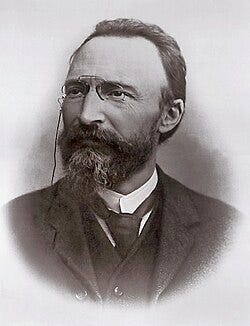
Bartolo Longo was an Italian lawyer who worshiped Satan and served as a priest to Lucifer.
Yet, on October 19th of this past year, he was canonized as one of the newest saints in the Church of Rome.
It’s quite a story. More on that in a moment.
Longo’s biography is almost as complicated as the labyrinth through which one must pass when moving from devout Christian to canonized saint. [Or Satanist to devout Christian to canonized saint.]
Now I confess this is not my area of expertise, since The Episcopal Church does not “make” saints, we merely inherited those who achieved sainthood before our 16th century split from the Church of Rome.
While we do recognize those who have made a significant contribution to the Gospel, either through their pattern of life, their practical or spiritual achievements, or in the manner of their deaths, we have no process for canonization.
But for the Church of Rome, which presents the outward and visible bureaucracy of an inward and spiritual grace, there is a process that is careful, deliberate, and devoted to the minutiae of miracles.
All of this falls under the responsibility of the wonderfully named Committee for the Dicastery for the Causes of Saints.
Here is the process:
After investigation of the person’s life and virtues, the Pope may declare them Venerable, or a Servant of God; this stage requires no miracle.
After one miracle is verified, the individual may be considered Blessed and is thus Beatified.
After a second miracle is verified, the individual may be recommended for Canonization to be known by the prefix of Saint.
As in any bureaucracy there are, of course, exceptions:
Martyrs who have died for our faith may be beatified without a miracle, though one miracle is still required for their canonization.
The Bishop of Rome can waive the requirement for a miracle in some instances. This occurred with Pope John XXIII, who was canonized sans miracle in 2014.1
Usually, this is not a rapid process. It certainly wasn’t so in the case of Saint Bartolo, but that’s because of his very special circumstances.
Longo grew up in a very devout, southern Italian family. His father, in particular, was devoted to the practice of the daily rosary. However, as can happen when you send your child off to receive an education, Longo fell under the influence of some bad teachers and found himself involved in the very popular spiritualist movement of the late 19th century.
He was also encouraged by some law school faculty members to regard Christianity as something for fools and peasants2. Thus, Longo soured on Jesus.
Still, he recognized the importance of having a spiritual aspect to one’s intellectual Being, so he plunged into spiritualism, then Satanism, with the same zeal with which his father used the daily rosary.
Unsurprisingly, this did not make him very happy. [Who would’ve figured?] In fact, becoming adept at Satanism did nothing more than feed his growing depression.
This, despite that he was rewarded with “promotions” within the Satanist community and actually became a full-fledged “priest” and willing thrall.
Now, let us take a moment to consider something that is familiar to storytelling, even though we are speaking of things factual and not fictional.
There is a theme in European literature known as the Bildungsroman, or “education story”. In such stories, the protagonist meets two types of “teachers“.
First, there is the “bad teacher”, who gives the protagonist an education that is ultimately twisted and harmful to him or her. Then there is the “good teacher” who presents the protagonist with teaching that is helpful, moral, and ultimately spiritually liberating.
Longo’s life story is certainly a Bildungsroman. The errant teaching offered by some of his law school faculty drove him out of Christianity and into the actual living worship of Satan and his minions, rendering Longo morally empty and physically and mentally ill.
He then was introduced, through a concerned law professor who noticed his disintegration, to his providential tutors, or “good teachers”.
In Longo’s case these were Friar Alberto Radente and Sister Caterina Volpicelli3 of the Dominican order, who saw something redeemable in this bright, young man, if disrupted by the nattering narcissism of his bad teachers.
With Christian patience and no small amount of love for him, his good teachers diverted his course away from Satan through a familiar tool.
As with his father, Bartolo Longo took up the daily use of the rosary in his prayers, which meant intercessions through the Blessed Virgin. That, as it turned out, made all the difference.
I felt my heart bursting. In such darkness of soul, a friendly voice seemed to whisper in my ear those words that I myself had read and that my holy friend… often repeated to me: If you seek salvation, spread the Rosary. These are Mary’s promises.4
Longo would become a Dominican tertiary, a lay person who does not take monastic vows nor live in cloister, but does maintain a strict, routine prayer life. This would prove a valuable practice after a trip to Pompei.
In that city, mostly famous for its volcanic activity in the 1st century, Longo found desperate ignorance about Roman Catholicism and Christianity in general. In response to his salvation, Longo committed to restoring the local church, almost a ruin, with proper social programs and a robust witness to the Gospel.
To the Blessed Virgin, he promised,
If your words are true that he who propagates your rosary will be saved, I shall reach salvation because I shall not leave this earth without propagating your rosary.5
Together with a local noblewoman of means, Longo enabled the reconstruction of that ruin of a church, eventually becoming known as the Pontifical Shrine of the Blessed Virgin of the Rosary of Pompei, a sacred place of renowned beauty that would thus serve as the cathedral for the diocese.
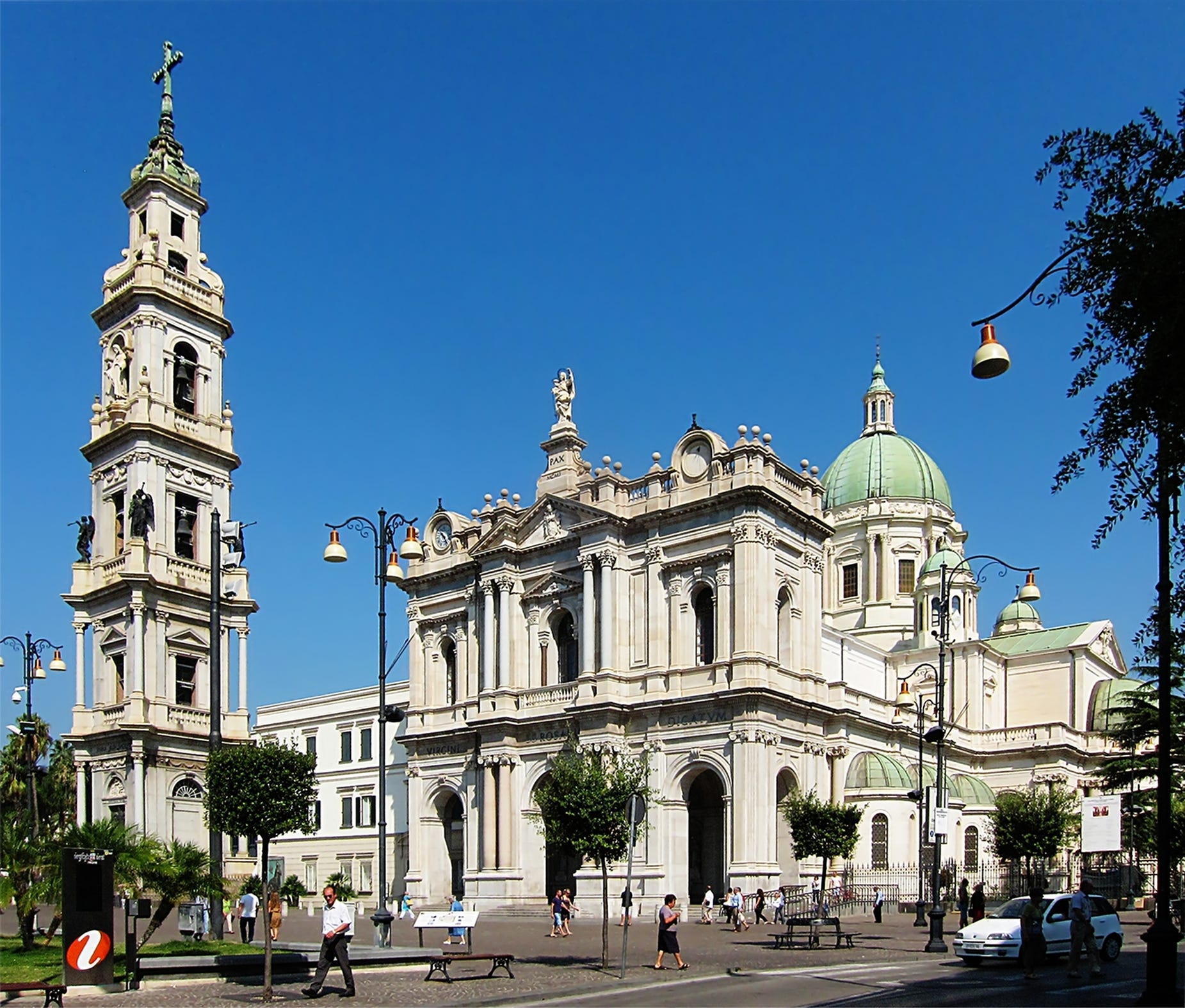
Through Friar Radente, Longo acquired a painting of the Blessed Virgin Mary, his intercessory patroness, that was in a sorry condition. Even though Longo did not care for the technique nor attitude displayed in the painting, he used it as a rallying point for fund-raising. Asking only a penny a month from patrons, Longo was able to raise the funds necessary to restore the painting and build the cathedral.6
This was aided by miracles of healing that became associated with the painting, calling forth pilgrims to Pompei and adding to the cathedral’s luster. After the church’s restoration, a new structure would then be built, larger and more opulent, to serve the transient congregation that came for healing and wholeness.
In 1891, the diocesan bishop blessed and dedicated the new building. From a largely ill-educated populace with a moribund spirituality, in thanksgiving for his salvation, Longo had built his masterpiece. They were moribund no longer.
In response to the grace bestowed upon Longo’s labors, he composed a series of rosary meditations and prayers that are still in use today. In fact, John Paul II added what are called the Luminous Mysteries to the rosary discipline.
O Blessed Rosary of Mary, sweet chain that unites us to God, bond of love that unites us to the angels, tower of salvation against the assaults of Hell, safe port in our universal shipwreck, we will never abandon you. You will be our comfort in the hour of death: yours our final kiss as life ebbs away. And the last word from our lips will be your sweet name, O Queen of the Rosary of Pompei, O dearest Mother, O Refuge of Sinners, O Sovereign Consoler of the Afflicted. May you be everywhere blessed, today and always, on earth and in heaven.7
Longo did not stop with the catherdral’s construction, though. In a chiaroscuro of activity, he also used the wherewithal from donations to create programs for orphans and widows and a Christian education curricula in Pompei and its environs, accentuating all that he had promised to the Blessed Virgin.
I suppose I’m drawn to his story, and relate it to our readers, as it is a lesson that there is no one, and no errant activity, that can draw one from God’s love. No one is beyond redemption, not even a priest of Lucifer, especially if they participate in their redemption with verve and faith.
O great God! What moved you then to wait so long for me, far from you, if not your essential goodness, since all your ways are reduced to mercy and truth? To my rebellions, you opposed infinite patience; to my departures, a most gentle kindness; to the offences against you, the sighs of your living, generous and paternal Heart. Finally, You extended Your hand of help to my unhappy falls. You saw my humiliation and my pains, and then Your mercy triumphed, for in humiliation You raise the mountains of Your grace. And the first fruit of your grace was to inspire in me an ardent, irrepressible, insatiable desire for You, truth, light, food, peace of man, Your creature.8
As we noted, the road to sainthood is gradual and cautious. Bartolo Longo was originally presented for consideration in 1939 but not beatified until 1980, even with John Paul II as his champion.9 In 2025, he was canonized.
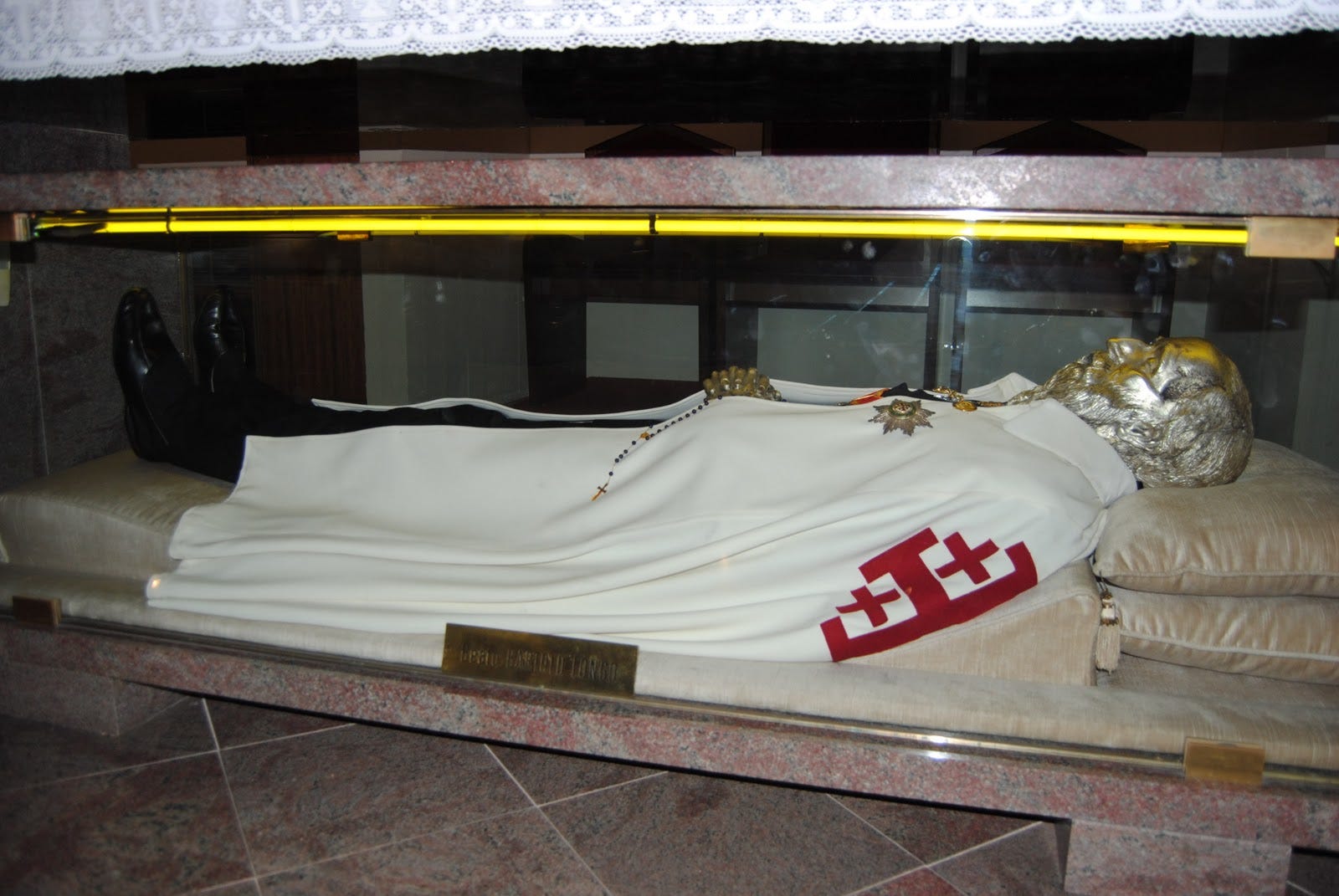
Saint Bartolo Longo’s remains rest on display for reverence and reflection in a reliquary at The Shrine of the Virgin of the Rosary of Pompei, vested as a Knight Grand Cross of the Order of the Holy Sepulchre of Jerusalem.
“My only desire is to see Mary, who saved me and will save me from the clutches of Satan.”10
John Paul II is also canonized, but in his case two verified miracles have been attributed to him.
I sense the many lawyers who read these pages are nodding their heads right now at law school faculty antics.
Also canonized as a saint, in her case in 2009.
from History of the Sanctuary of Pompeii
from Longo’s series of rosary meditations
This was not done overnight. In fact, the painting did not achieve its completed form until 1965 when Vatican art restorers, who are among the best in the world, were tasked with the responsibility.
from the Prayer of Saint Bartolo Longo, which concludes St. John Paul II’s encyclical on the Holy Rosary
from History of the Sanctuary of Pompeii
JP II was not only a man of God, but also a pretty savvy marketer. He would give Longo the title “The Apostle of the Rosary”, and refer to him as such in official and unofficial communications.
Purported to be his final words.