
B. Traven 1882? - 1969?
"The creative person should have no other biography than his works."

[This is something enjoyable from a few years ago, temporarily liberated from behind the paywall.]
John Huston was sitting in a humid café in Mexico City waiting to meet a man who did not exist.
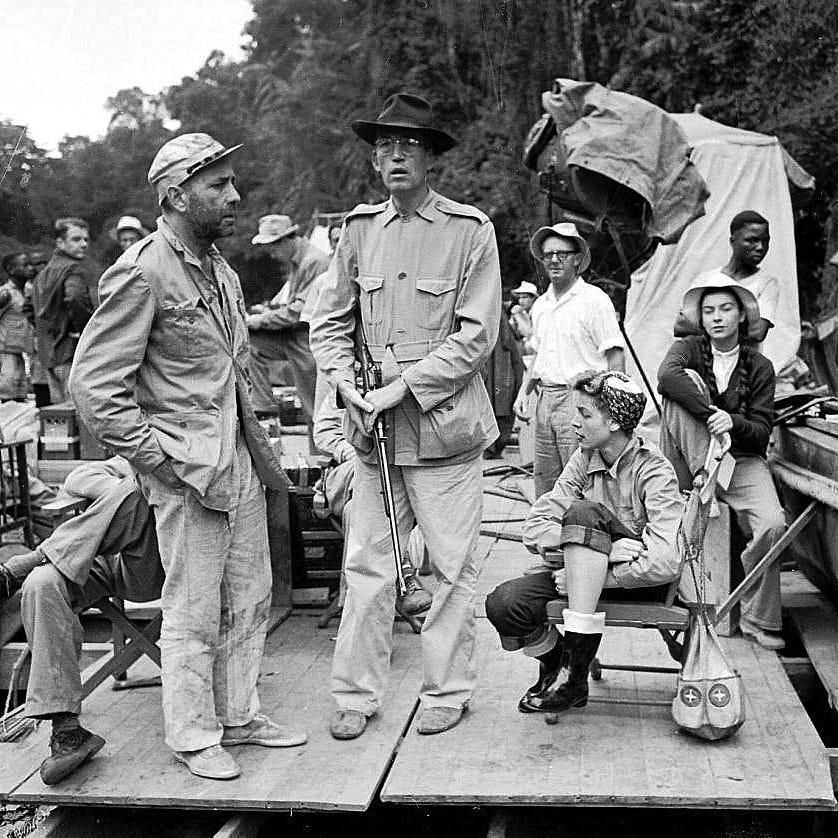
Without intending to, Huston had found himself in a place of ephemeral legend in Mexico, known in Spanish as "El Camino", that likewise doesn't exist on any map, save for that written in the consciousness of those who yearn.
It refers to what outsiders experience when they come to the southern hemisphere to find...well, either something or nothing, depending on their desire, and become lost within the quest.
It has claimed many people, men and women, through the years.
There have been explorers, of course, who have worked their way through the jungles and beaches of Mexico; there have been poets, artists, and any number of musicians. J. Frank Dobie, Ambrose Bierce, William Cullen Bryant, William Burroughs, Jack London, Katherine Anne Porter, Edna Ferber, Jack Kerouac, Hart Crane, and Ken Kesey offhand come to mind as just a few of the gringos and gringas who have, one way or another, hiked the mythical El Camino.
Personally, I've known a number of surfers who have looked for oblivion in the Mexican waves.
Huston surely must have mused that the road that does not exist is an apt place to search for a man who does not exist.
During the 1920's and 30's a series of riveting novels, set mostly in Mexico and mostly about the ephemeral experience of El Camino, had been best-sellers in Europe. Their author, known only as B. Traven, had remained aloof from any sort of publicity. He lived somewhere in Mexico, no one really knew where, and wrote in German, with his publisher translating his works into the various languages of his continental audience.
Having spent several years as the ne'er-do-well son of a recognizable and bankable stage and movie actor, John Huston had been a boxer, drinker, flunky, go-fer, writer, and general dogsbody in the movie industry until, to quote from Steely Dan, "he crossed a diamond with a pearl" and wound up writing the screenplay for and directing "The Maltese Falcon" [1941], a critical and box office hit that earned serious money for his studio, made a leading man out of Humphrey Bogart, and helped to create the entire genre of film noir.
As he had learned from his father, the noted film actor Walter Huston, the problem with being a success in a world of transient fame is that one is only popular until the next successful project comes along.
Having lived and traveled freely in Europe and familiar with the popularity of Traven's work, Huston was particularly interested in Traven's 1927 novel, The Treasure of the Sierra Madre, especially as it was the first and only Traven book translated and marketed in the United States at that time.
That the novel was an American best-seller and a terrific story convinced Huston that it should be translated to the screen. Before he could begin to do so, however, the whole world became distracted with World War II.
When Huston returned to civilian life after directing documentaries for the War Department, he again returned to his Sierra Madre project.
His first item of business was receiving the author's permission to use his novel, something that was trickier than it ordinarily would have been since no one was really sure of Traven's whereabouts or true identity. Still, Huston was not one to be daunted and he began a near Quixotic quest to contact the author and receive his permission.
So it was that Huston found himself waiting for Traven to join him for a drink or three in Mexico City. However, instead of Traven, a man introducing himself as “Hal Croves” turned up, explaining that he was serving as Traven's representative and had the power of attorney necessary to complete their contractual negotiations.
While Huston suspected the Croves was Traven, he was willing to indulge him in order to complete the film. The meeting went well and the two met again in Acapulco to finalize the deal and appoint Croves as a "technical adviser" to the film. In 1947 the filming began on location in Mexico with Croves a familiar personality on the set.
Once filming was completed, Hal Croves disappeared.
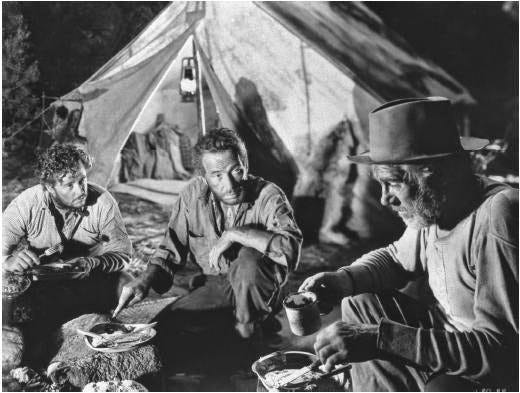
Of course, The Treasure of the Sierra Madre, starring Humphrey Bogart and Huston's father, Walter, was a huge success; nominated for an Academy Award for Best Picture of 1948 and earning Oscars for Best Screenplay Adaptation and Best Director for John Huston.
With the popularity of the film and the reignited interest in the novels of Traven, reporters became interested in the elusive author. However, the only connection to Traven was Hal Croves, who had not been seen for over a year.
A particularly intrepid reporter for a Mexican newspaper began a search for Croves and instead found a fellow in Acapulco named Traven Torsvan, a recluse called "El Gringo" by his neighbors.
His interest piqued, the reporter discovered through immigration paperwork that Torsvan was born in Chicago and had come to Mexico in 1930, eventually establishing residency.
Using questionable techniques, mainly bribery and petty theft, the reporter established that El Gringo was receiving royalty checks in the name of "B. Traven" along with correspondence from other authors.
When confronted by the reporter, Torsvan, like Croves, disappeared.
A decade later, after interest in Traven and his true identity had cooled, the mysterious Hal Croves, in absentia from the human race since 1947, reappeared to serve as Traven's official representative in negotiation with European filmmakers interested in emulating Huston's success with Treasure.
He would even attend film festivals in Europe, only to be peppered by reporters with questions about his true identity.
Croves would die in 1969. His widow, who had also been his secretary, would then reveal the true story of B. Traven. Here is where the story becomes even more wonderful.
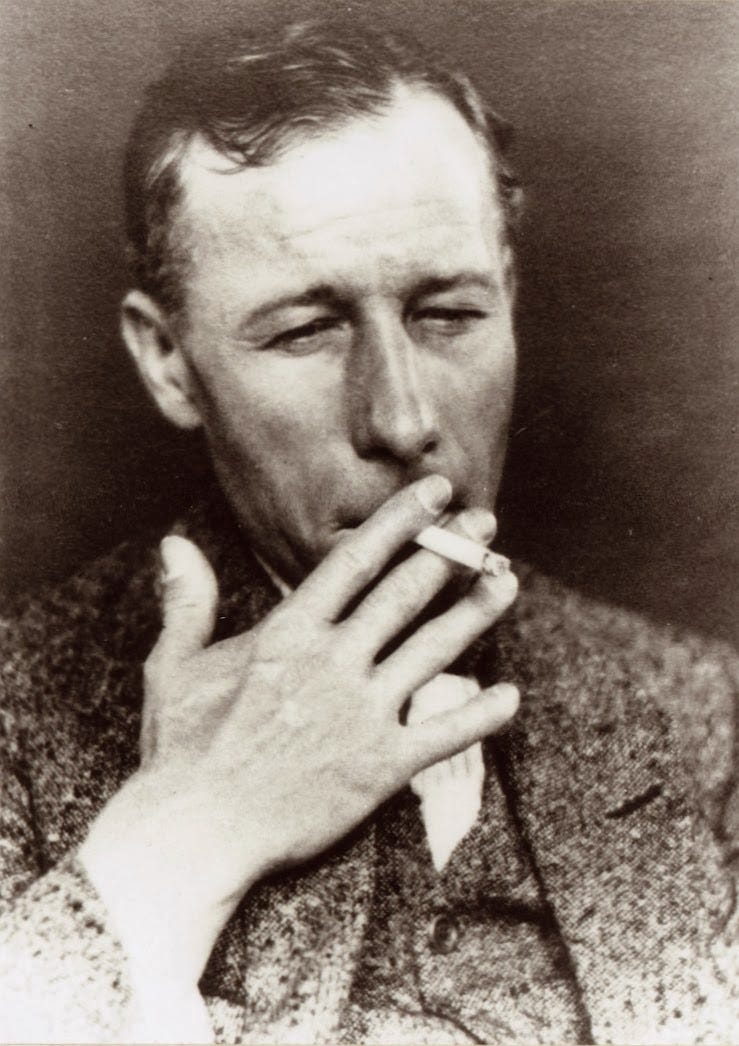
Senora Croves told the press that her late husband had, in fact, been a German anarchist named Ret Marut [aka Otto Feige]. In Germany, her husband published a successful novel, The Death Ship, and edited an antigovernment magazine for which he was eventually arrested and sentenced to death. He managed to escape to Mexico, altering his identity to that of an American émigré.
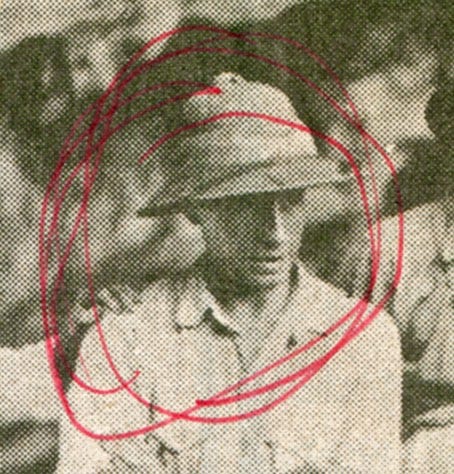
During his years south of the border, in addition to writing over a dozen novels and short story anthologies, Feige/Marut/Torsvan/Croves/Traven also managed to work as a photographer for some expeditions into the Mexican jungles [from which the above photo, maybe of Traven, comes], as a translator and guide, and as an inn-keeper. It was a busy life for him, but since he may have been five or more people, perhaps not that unusual.
There are now small avocational groups devoted to claiming to know Traven's real identity and disparaging other theories. It's rather entertaining but largely meaningless. As Traven noted, for a true artist it's about the work, not the biography.
His story is yet another tale of those who, like his characters, travel El Camino in search of something that they never entirely find, then leave behind a life more full of questions than answers.
B. Traven's novels are now all available in English and most are still in print with some available in e-book format.
Where the royalties now go is anyone’s guess.
Great storytelling around the Traven mystery. The detail about Huston suspecting Croves was Traven but playing along anyway captures that weird collaborative dance between artist and audience perfectly. I've always found it intresting how Traven lived his philosophy so literally, becoming the work instead of just preaching it. The multiple identities weren't just evasion, they were the whole point: proving an artist can exist entirely through their creations.